 ENG
 INA
Strengthening Governance and Research Integrity, the Doctoral Program in Legal Studies at FH Unud Holds 2026 Academic Handbook Revision
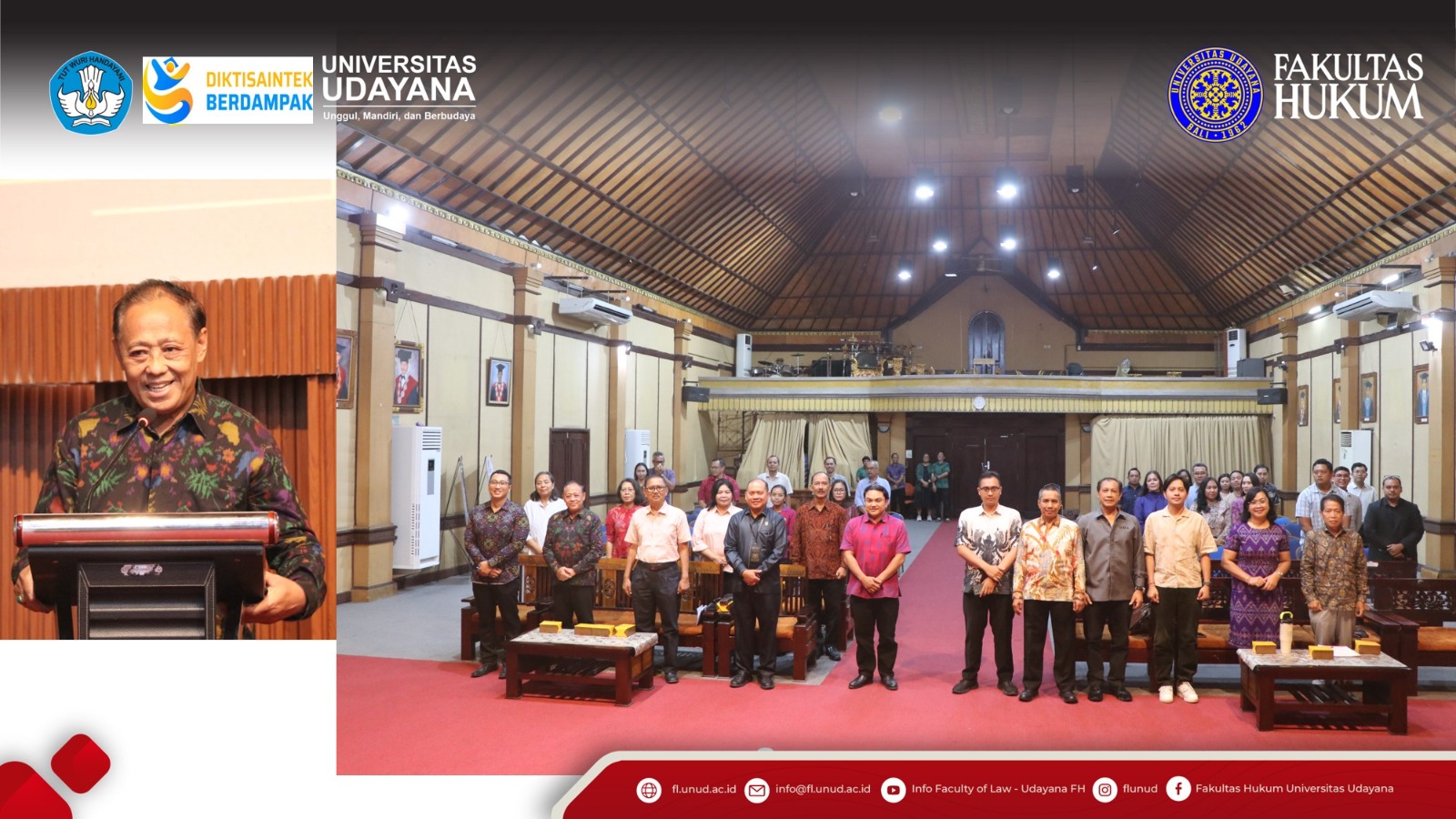
DENPASAR – The Doctoral Program in Legal Studies (PSDIH), Faculty of Law, Udayana University (FH Unud), held a 2026 Academic Handbook Revision session at Kertasabha Convention Hall, Denpasar Campus, on Tuesday (November 17, 2026). Attended by doctoral students, the event was officially opened by the Dean of the Faculty of Law, Udayana University, following an activity implementation report delivered by the Coordinator of the Doctoral Program in Legal Studies. This academic forum was organized as a strategic step to refine predictable and well-governed doctoral education, enhance the quality of dissertation research, and produce highly competitive graduates.
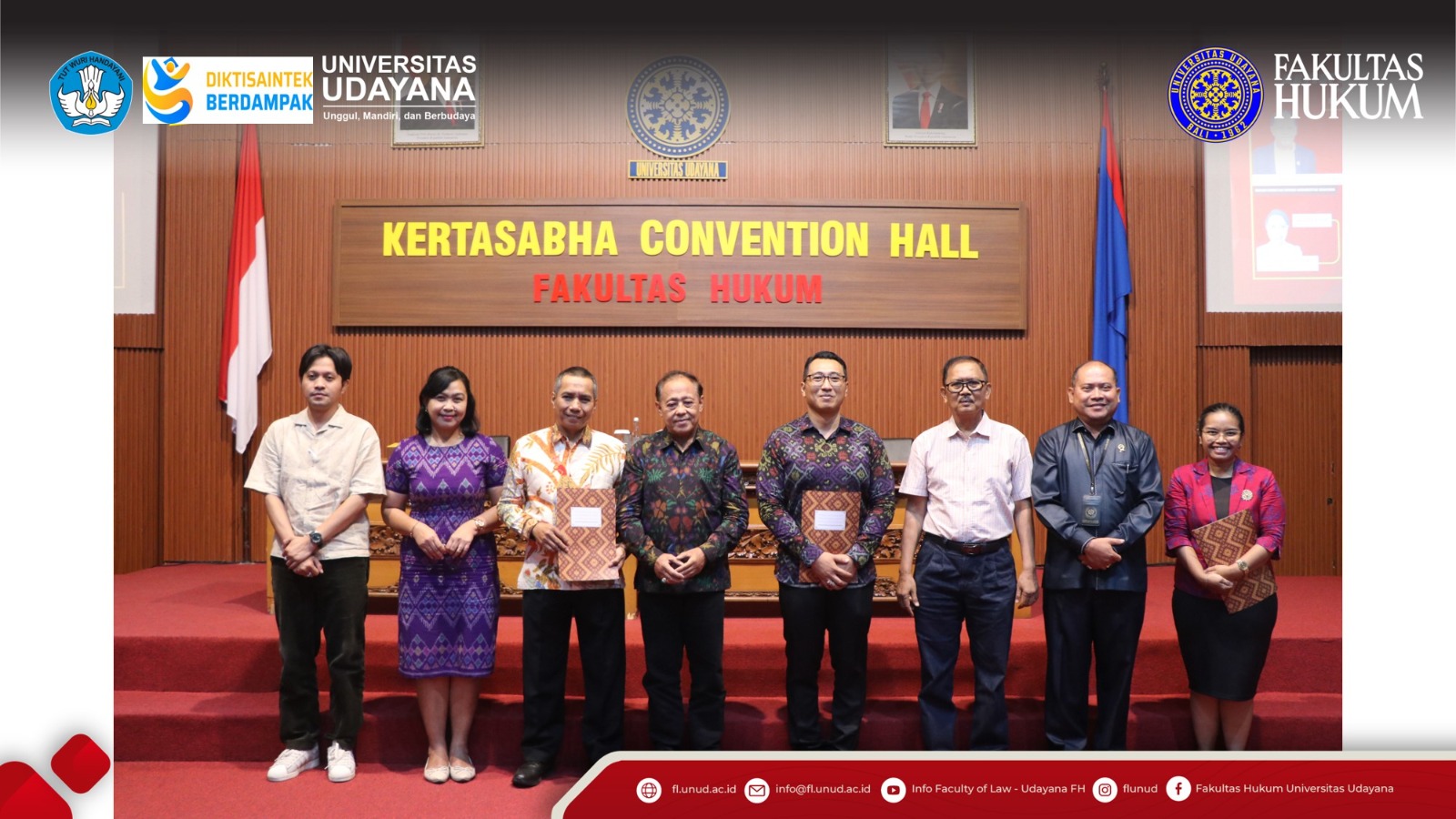
In the main session, guided by a moderator, the event featured two competent speakers: the Coordinator of the Doctoral Program in Legal Studies at FH Unud, Prof. I Gusti Ngurah Parikesit Widiatedja, S.H., M.Hum., LL.M., Ph.D., and a 2023 alumnus of PSDIH FH Unud, Dr. Mochamad Sukedi, S.H., M.H. Bringing together program leadership and an alumni representative in a single discussion forum was designed to integrate institutional quality assurance policies with empirical experience gained throughout the doctoral education process.
In the first presentation, Prof. I Gusti Ngurah Parikesit Widiatedja explained that the draft 2026 Academic Handbook is rooted in the noble values of Tri Hita Karana, Cakra Widya Prawartana, and Taki-takining Sewaka Guna Widya, culminating in graduate learning outcomes aligned with Level 9 of the Indonesian National Qualifications Framework (KKNI). As a study program that has earned 'Unggul' (Excellent) accreditation from BAN-PT and accreditation from FIBAA, PSDIH FH Unud establishes a study load of 62 credits (SKS) with a standard completion period of six semesters (three years) and a maximum limit of twelve semesters, in which 84 percent of the curriculum weight—equivalent to 52 credits—is focused on dissertation research. To uphold global quality standards, the handbook also strengthens the involvement of external examiners from international partner universities—such as the University of Melbourne, Maastricht University, and FH Dortmund—while requiring students to publish articles in international journals and deliver oral presentations at international conferences prior to taking their closed defense examination.
Furthermore, Prof. Parikesit reaffirmed the study program's commitment to safeguarding academic integrity by regulating the use of Generative Artificial Intelligence (Generative AI) and enforcing academic discipline. Under the new guidelines, the use of artificial intelligence is permitted solely as a supporting tool for tasks such as literature searches, academic translation, language editing, and data visualization. Conversely, using such technology to complete examinations or generate scholarly works in full without significant human contribution is strictly prohibited, carrying tiered sanctions for integrity violations ranging from formal reprimands to the revocation of academic degrees and diplomas.
Complementing the presentation from the program management's perspective, Dr. Mochamad Sukedi shared insights from an alumni viewpoint regarding the importance of strengthening predictable and reliable academic governance. He advocated for standardizing the dissertation supervision system, encompassing regular supervision meeting schedules, clear turnaround targets for feedback on student manuscripts, and an accountable mechanism for replacing supervisors (promoters) or co-supervisors (co-promoters) should obstacles arise during the supervision process. In addition, he emphasized that Dissertation Supporting Courses (MKPD) should be genuinely tailored to the substantive needs of each student's research and taught by relevant lecturers, while expanding alumni involvement as guest lecturers, research and publication partners, and collaborators in professional network development.
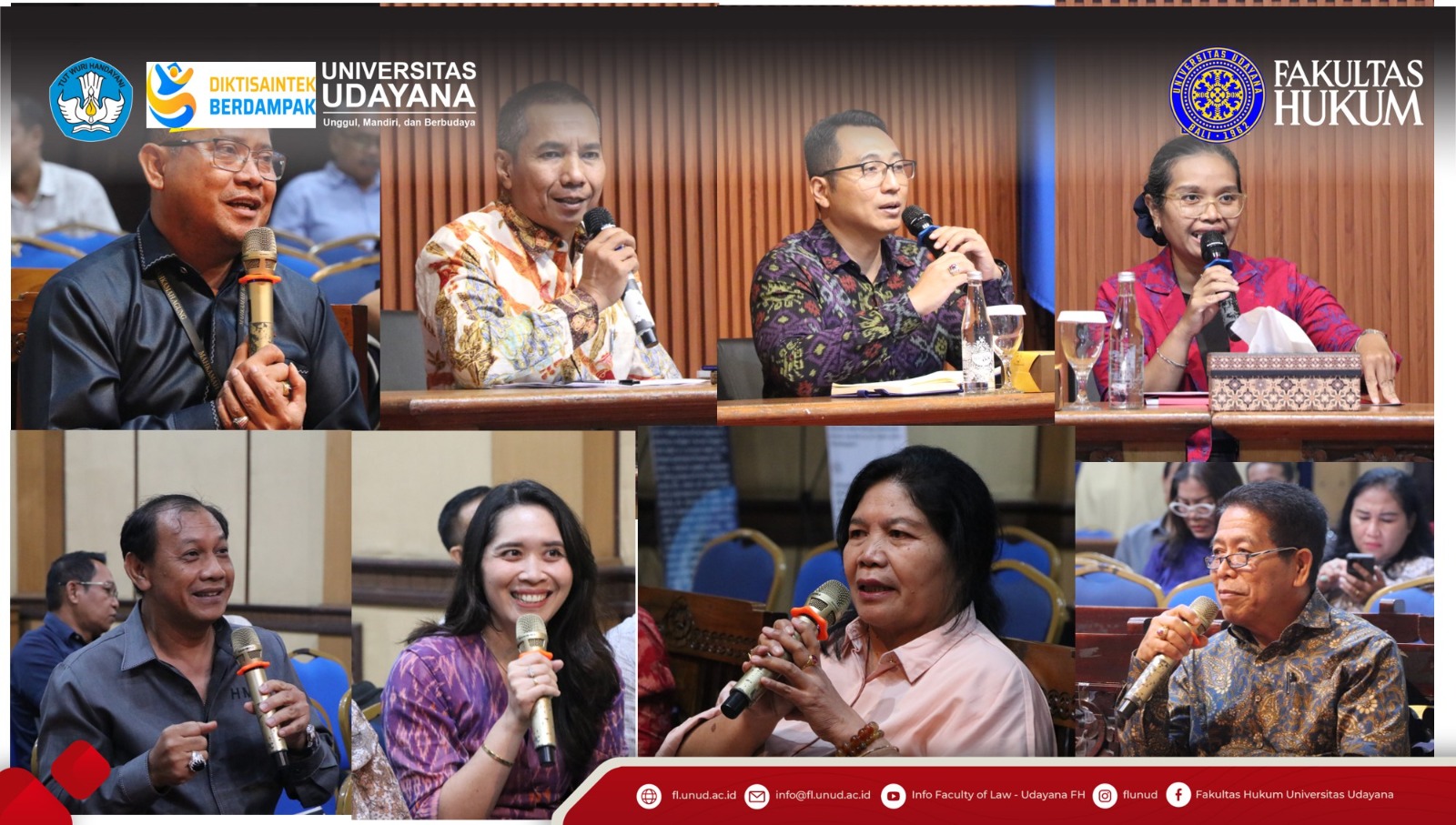
The event then continued with an interactive question-and-answer session between the doctoral students and both speakers before concluding with a summary of key takeaways. Through this revision of the academic handbook, the Faculty of Law, Udayana University, reaffirms its commitment to fostering a transparent and high-quality academic ecosystem to produce Doctors of Law who are excellent, independent, and cultured.
Gallery

UDAYANA UNIVERSITY